How to Create a Monthly Budget That Actually Works
If you’re wondering how to create a monthly budget that actually works, the goal isn’t to make every purchase feel like a mistake.
A good budget does something much more useful: it shows you where your money is going, helps you prepare for upcoming expenses, and gives you a practical way to work toward your financial goals.
The problem is that many budgets are built around an ideal month. They assume you won’t eat out, your car won’t need repairs, no annual subscription will renew, and every expense will go exactly as planned.
Real life doesn’t work that way.
A budget that actually works needs room for groceries that cost more than expected, irregular bills, savings goals, entertainment, and the occasional surprise.
In this guide, you’ll learn how to create a realistic monthly budget step by step — including a complete example based on $5,000 in monthly take-home pay.
What Is a Monthly Budget?
A monthly budget is a plan for how you’ll use the money you expect to receive during the month.
At the simplest level:
Monthly income − Monthly expenses = Money remaining
Your budget should help you answer four basic questions:
- How much money comes in?
- How much money goes out?
- What are you spending it on?
- How much can you put toward savings and other goals?
https://consumer.gov/your-money/making-budget
recommends writing down your income and expenses, comparing the two, tracking what you actually spend, and using that information to adjust the following month’s budget.
The goal isn’t to predict every dollar perfectly.
The goal is to make your money more intentional.
Step 1: Start With Your Monthly Take-Home Income
Before deciding how much you can spend, determine how much money you actually have available.
For most employees, the most useful starting point is take-home pay — the amount deposited into your account after taxes and payroll deductions.
Your monthly income might include:
- Paychecks
- Freelance income
- Side-business income
- Rental income
- Regular benefits
- Other reliable sources of income
Avoid building your budget around money that isn’t reasonably predictable.
If your income changes from month to month, look at several months of earnings rather than using your highest-paying month.
Consumer.gov suggests that people without regular monthly income can estimate monthly income using a longer period of earnings.
Example
For the rest of this guide, we’ll use:
Monthly take-home income: $5,000
That’s the amount available to spend, save, invest, or use toward debt.
Step 2: List Your Fixed and Essential Expenses
Next, identify the expenses you need to cover.
Start with recurring bills such as:
- Rent or mortgage
- Electricity
- Water
- Internet
- Phone service
- Insurance
- Minimum debt payments
- Childcare
- Transportation
- Essential medical expenses
Some expenses will stay relatively stable.
If your rent is $1,500 per month, it’s easy to plan around.
Other expenses, such as electricity or heating, may change throughout the year.
Don’t worry about reducing anything yet.
At this stage, you’re trying to understand your current financial picture.
Step 3: Look at What You Actually Spend
This may be the most important step.
Don’t create your budget based only on what you think you spend.
Check what you actually spend.
Review the last several months of:
- Checking account transactions
- Credit card statements
- Digital wallet purchases
- Cash spending
- Subscription payments
The Consumer Financial Protection Bureau recommends reviewing several months of checking and credit card history and creating an “as-is” budget that reflects current spending rather than what you think you should be spending.
You may think you spend $300 a month on restaurants.
Your statements might show:
January: $465
February: $520
March: $445
That’s valuable information.
You can’t make an effective decision about your spending until you know the real number.
Step 4: Separate Needs From Wants
Once you’ve reviewed your transactions, divide your spending into broad categories.
Needs
Needs are expenses that are necessary to maintain your basic life and financial obligations.
They might include:
- Housing
- Basic groceries
- Utilities
- Insurance
- Transportation needed for work
- Healthcare
- Minimum debt payments
Wants
Wants are purchases that improve your lifestyle but usually offer more flexibility.
Examples include:
- Restaurant meals
- Streaming subscriptions
- Entertainment
- Vacations
- Gaming
- Upgraded electronics
- Non-essential shopping
This doesn’t mean you need to eliminate your wants.
A budget that leaves no room for enjoyment may be difficult to follow for very long.
The point is to know which expenses are flexible when you need to make adjustments.
Step 5: Plan for Expenses That Don’t Happen Every Month
One of the biggest budgeting mistakes is thinking only about monthly bills.
Some expenses arrive every few months or once a year.
For example:
- Car maintenance
- Car registration
- Insurance premiums
- Holiday gifts
- Travel
- Medical expenses
- Home repairs
- School expenses
- Annual subscriptions
The Consumer Financial Protection Bureau recommends looking back over several months so that less-frequent costs aren’t left out of your budget.
A simple solution is to convert predictable annual expenses into monthly amounts.
Suppose your annual car insurance bill is:
$1,200 per year
Instead of getting surprised by a $1,200 payment:
$1,200 ÷ 12 = $100 per month
Set aside $100 each month.
These smaller savings buckets are often called sinking funds.
Sinking Fund Example
| Future expense | Annual cost | Monthly amount |
|---|---|---|
| Car maintenance | $600 | $50 |
| Holiday gifts | $600 | $50 |
| Vacation | $1,200 | $100 |
| Annual subscriptions | $240 | $20 |
| Total | $2,640 | $220/month |
Instead of finding $2,640 unexpectedly throughout the year, you’re planning for approximately $220 per month.
That’s much easier to manage.
Step 6: Make Saving a Budget Category
Many people approach saving like this:
Income → spending → save whatever remains
There’s a problem with that system.
There may not be much left.
Instead, consider treating savings like another planned category.
Consumer.gov notes that savings can be included as one of the expenses in your monthly budget.
Your savings categories might include:
- Emergency savings
- Retirement contributions
- Investments
- Vacation savings
- Home down payment
- Car replacement fund
- Other financial goals
You don’t need to start with a huge amount.
Consistency matters.
For example:
Emergency savings: $300/month
Long-term investing: $400/month
Other goals: $100/month
Total:
$800/month
Step 7: Build an Emergency Fund Into the Plan
A sinking fund prepares you for expenses you expect.
An emergency fund is different.
It’s money reserved for expenses you didn’t expect.
That could include:
- An urgent car repair
- An unexpected medical expense
- A broken appliance
- Temporary loss of income
- An emergency trip
The Consumer Financial Protection Bureau describes an emergency fund as a cash reserve specifically set aside for unplanned expenses or financial emergencies and notes that even small amounts can help people recover from unexpected costs.
There isn’t one emergency-fund amount that’s appropriate for everyone.
The right target depends on factors such as your job stability, household expenses, insurance coverage, debt, and other available resources.
The important first step is creating the habit of setting money aside.
Step 8: Create Your Monthly Budget
Now let’s put everything together.
Suppose you bring home $5,000 per month.
Here’s one possible budget:
| Category | Monthly Budget |
|---|---|
| Housing | $1,500 |
| Utilities, internet and phone | $350 |
| Groceries | $550 |
| Transportation | $400 |
| Insurance and healthcare | $300 |
| Minimum debt payments | $250 |
| Dining and entertainment | $350 |
| Shopping and personal expenses | $200 |
| Emergency savings | $300 |
| Investing/long-term savings | $400 |
| Sinking funds | $200 |
| Miscellaneous | $150 |
| Total expenses and savings | $4,950 |
| Remaining buffer | $50 |
This example isn’t a formula you need to copy.
Someone living in San Francisco may spend far more on housing.
Someone without a car may spend much less on transportation.
A family with children may have significant childcare expenses that a single person doesn’t have.
Your budget needs to reflect your life, not somebody else’s percentages.
Step 9: Consider a Budgeting Method
Once you understand your income and expenses, you can choose a system for managing them.
You don’t need a complicated method.
Here are three common approaches.
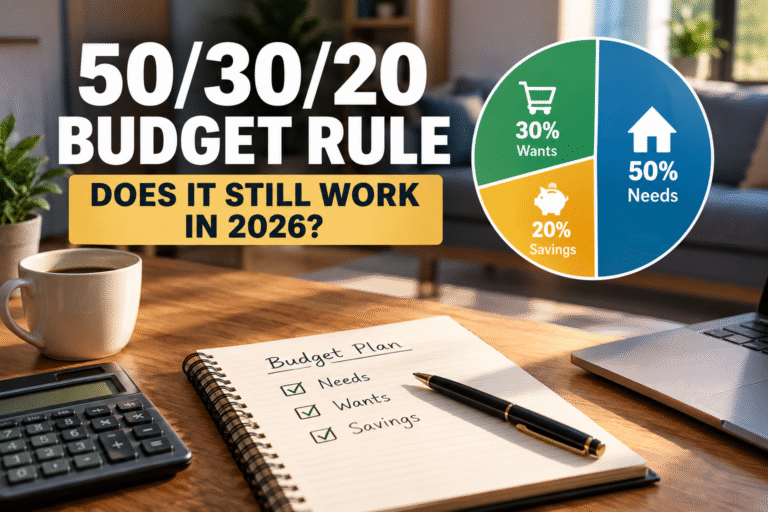
1. The 50/30/20 Framework
This popular framework roughly divides take-home income into:
50% for needs
30% for wants
20% for savings and financial goals
For $5,000 in monthly take-home pay, that would be:
Needs: $2,500
Wants: $1,500
Savings/goals: $1,000
It’s simple, but don’t treat the percentages as rules.
Housing alone may make a 50% needs target unrealistic in a high-cost city.
Use the framework as a reference point rather than forcing your finances to fit it.
2. Zero-Based Budgeting
With a zero-based budget, every dollar of income receives a purpose.
If you make $5,000, you assign the full $5,000 across spending, saving, investing, and other goals.
That doesn’t mean you need to spend every dollar.
Money assigned to savings still has a purpose.
Zero-based budgeting can work well for people who enjoy detailed planning.
3. Pay Yourself First
This approach prioritizes savings before discretionary spending.
For example:
Take-home pay: $5,000
Immediately move:
$500 to emergency savings
$500 to investing
Then build your spending plan around the remaining $4,000.
This method may appeal to people who have trouble saving whatever remains at the end of the month.
Step 10: Add a Miscellaneous Category
Even a detailed budget can’t predict everything.
Maybe you need a birthday gift.
Maybe your haircut costs more than expected.
Maybe there’s a school fee you forgot about.
That’s why a small miscellaneous category can be useful.
The Consumer Financial Protection Bureau recommends including miscellaneous expenses when building a realistic picture of monthly spending.
Just don’t let “miscellaneous” become a category where hundreds of dollars disappear every month without explanation.
If the same expense keeps appearing, give it its own category.
Step 11: Track Your Spending During the Month
Building the budget isn’t enough.
You also need to know whether you’re following it.
Imagine you’ve budgeted:
$400 for restaurants and entertainment
Halfway through the month, you’ve already spent:
$340
You now know you have $60 remaining.
Without checking your budget until the end of the month, you wouldn’t have that information when making your next decision.
You don’t necessarily need to track every transaction manually.
You can use:
- A spreadsheet
- A budgeting app
- Your bank’s spending tools
- A notebook
- Your credit card’s transaction categories
Use whatever system you’re most likely to maintain.
Step 12: Pay Attention to When Bills Are Due
Sometimes the problem isn’t how much you earn in a month.
It’s when the money arrives.
Suppose you receive paychecks on the 1st and 15th, but most of your largest bills are due between the 1st and 10th.
Your monthly budget may technically work, but your cash flow can still feel tight.
A bill calendar can help.
The Consumer Financial Protection Bureau recommends recording each bill, the amount owed, and its due date, then checking the calendar regularly.
For example:
| Bill | Amount | Due date |
|---|---|---|
| Rent | $1,500 | 1st |
| Car payment | $350 | 8th |
| Internet | $70 | 12th |
| Credit card | $200 | 18th |
| Insurance | $150 | 25th |
Seeing everything together makes it easier to plan which paycheck will cover which expenses.
Step 13: Compare Your Budget With Reality
At the end of the month, compare what you planned with what actually happened.
For example:
| Category | Budgeted | Actual | Difference |
|---|---|---|---|
| Groceries | $500 | $575 | +$75 |
| Restaurants | $350 | $425 | +$75 |
| Transportation | $400 | $360 | -$40 |
| Entertainment | $150 | $120 | -$30 |
Now you have information you can use.
Maybe your grocery budget was too optimistic.
Maybe you’re comfortable spending $425 on restaurants.
Or maybe eating out isn’t important enough to justify that spending.
There’s no automatic right answer.
Your budget helps you see the trade-off.
Step 14: Adjust the Budget Every Month
Your budget isn’t permanent.
Expenses change.
Income changes.
Goals change.
Your first month may be inaccurate because you’re still learning what you actually spend.
That’s completely fine.
At the end of each month:
- Compare planned spending with actual spending.
- Identify categories that consistently go over budget.
- Decide whether to increase those categories or reduce the spending.
- Check your progress toward savings goals.
- Adjust next month’s plan.
Consumer.gov recommends reviewing actual spending at the end of the month and using what you learned to create the next month’s budget.
Think of budgeting as a feedback loop rather than a one-time project.
Common Monthly Budgeting Mistakes
Even a good plan can fail when a few common problems are overlooked.
Creating an Unrealistically Strict Budget
Cutting every restaurant meal, hobby, subscription, and entertainment expense might make the spreadsheet look impressive.
But if you hate the plan, you’re unlikely to follow it.
A sustainable budget usually leaves some room for things you enjoy.
Forgetting Irregular Expenses
Annual insurance, car repairs, holidays and travel don’t happen every month.
They still need to be part of your financial plan.
Budgeting With Gross Income
The salary listed in your job offer isn’t necessarily the amount available for spending.
Start with money that actually reaches your household.
Ignoring Small Recurring Expenses
One $8 subscription may not matter much.
Six subscriptions plus delivery fees, small app purchases and other recurring costs can become meaningful.
Treating a Bad Month as Failure
Budgets are estimates.
If your grocery bill goes over budget one month, you haven’t “failed.”
Figure out why and adjust.
Never Reviewing the Budget
A budget that isn’t checked becomes a document rather than a financial tool.
A short weekly review can often prevent surprises later.
What If Your Expenses Are Higher Than Your Income?
This is one of the most useful things a budget can reveal.
Suppose your monthly numbers are:
Take-home income: $4,000
Expenses: $4,500
That’s a:
$500 monthly shortfall
You now know the problem that needs to be solved.
Start by separating your expenses into three groups.
Easy to Change
Examples:
- Unused subscriptions
- Restaurant spending
- Entertainment
- Non-essential shopping
Possible to Change
Examples:
- Insurance provider
- Phone plan
- Internet package
- Grocery habits
- Transportation choices
Difficult to Change
Examples:
- Rent
- Mortgage
- Major debt obligations
- Childcare
Reducing discretionary spending can help, but don’t spend months trying to save $10 at a time if one large recurring cost is responsible for most of the problem.
You may need a combination of lower spending and higher income.
If debt or essential expenses have become difficult to manage, getting individualized help from a reputable financial counselor may also be appropriate.
How to Make Budgeting Easier
You don’t need advanced software.
A budgeting system only works when you’re willing to use it.
Try making the process as simple as possible.
Automate What You Can
Automatic transfers can make regular saving easier.
You might schedule a transfer shortly after payday rather than relying on yourself to remember at the end of the month.
Have a Weekly Money Check-In
Ten minutes may be enough.
Check:
- Account balances
- Recent spending
- Upcoming bills
- Remaining category budgets
Keep the Number of Categories Manageable
You don’t necessarily need 40 different categories.
Start broad and create more detailed categories only where the detail helps you make decisions.
Give Every Financial Goal a Name
“Save more money” is vague.
“$3,000 emergency fund” is measurable.
“$2,500 vacation fund by June” is measurable.
Specific goals make it easier to decide where your extra money should go.
Monthly Budget Checklist
Before finishing your monthly budget, make sure you’ve covered the basics:
- Calculate your monthly take-home income.
- Review several months of actual transactions.
- List fixed expenses.
- Estimate variable expenses realistically.
- Include less-frequent annual and seasonal expenses.
- Create sinking funds where appropriate.
- Add savings to the budget.
- Include a small miscellaneous category.
- Record bill due dates.
- Track spending during the month.
- Compare actual spending with your budget.
- Adjust the following month’s plan.
You don’t need to do all of this perfectly on day one.
A budget becomes more accurate as you use it.
Frequently Asked Questions
How much should I save each month?
There’s no single savings percentage that’s appropriate for everyone.
Your savings rate depends on your income, essential expenses, debt, financial responsibilities and goals.
If saving a large percentage isn’t realistic today, starting with a smaller sustainable amount can still establish the habit.
Should I budget every dollar?
You can, but you don’t have to.
Zero-based budgeting assigns every dollar a purpose, while other systems leave a general monthly buffer.
Both can work.
Choose the method that helps you stay consistent.
How do I budget with irregular income?
Look at several months of income to understand your typical earnings.
If your income fluctuates significantly, consider basing essential spending on a more conservative income estimate and saving more during higher-income months.
How often should I check my budget?
At a minimum, review your budget monthly.
When you’re first getting started, checking once a week can make it easier to identify overspending before the month ends.
Do I need a budgeting app?
No.
A spreadsheet, notebook, bank account history or budgeting app can all work.
The best budgeting tool is the one you’ll continue using.
What’s the Difference Between an Emergency Fund and a Sinking Fund?
An emergency fund is designed for unexpected financial shocks.
A sinking fund is money you save gradually for an expense you already expect.
For example, replacing a tire after an unexpected blowout might come from an emergency fund.
Saving $100 per month for a vacation you plan to take next year would be a sinking fund.
Final Thoughts
A useful monthly budget isn’t about spending as little money as possible.
It’s about deciding where your money should go before it disappears.
Start with your actual take-home income.
Look at what you’ve really been spending.
Plan for bills that don’t arrive every month.
Build savings into the budget instead of waiting to see what’s left.
And don’t expect your first budget to be perfect.
The most effective budget is one you can follow, review and improve over time.
A few months from now, you’ll have something much more valuable than a perfect spreadsheet:
A clear understanding of your money and a repeatable system for managing it.
This article is for educational and informational purposes only and does not constitute personalized financial advice.